Staying up into the early hours of the morning isn’t something that I do regularly.
Last Friday, I made an exception because I wanted to see history in the making as the crew of Artemis II, part of NASA’s return-to-the-Moon programme, prepared for splashdown in the Pacific Ocean after an epic journey to the Moon. It hadn’t happened for over 50 years.
As the Orion capsule hurtled to Earth at speeds of 25,000 miles per hour through temperatures half as hot as the sun, I, like many across the world, held my breath for six minutes during the communication blackout. Then came the words that will be quoted for years to come, “Houston Integrity, we have you loud and clear.”
Over the last week, as I have tuned into the NASA livestream, it has had me reflecting on the textbook team that has been role-modelled for us all to see.
Just for a minute, imagine being confined with your teammates in a small capsule for 24 hours for 10 days in outer space on a voyage to the moon. How do you think it would go? (I mean, even getting onto a Teams call for many of us can be a challenge!)
In Artemis II, NASA offers us some powerful, real-world lessons about teamwork from both the astronauts and the thousands of people supporting them.
Here are my three key takeaways:
Trust is built through preparation, not just personality
The astronauts relied on each other in extreme conditions where mistakes weren’t an option. Trust didn’t come from “getting along”. It was built through years of shared training, simulations and problem-solving.
Strong teams invest time in preparation and practice together. Trust grows from proven reliability, not making assumptions. Being there for each other, no matter what.
Diversity strengthens problem-solving
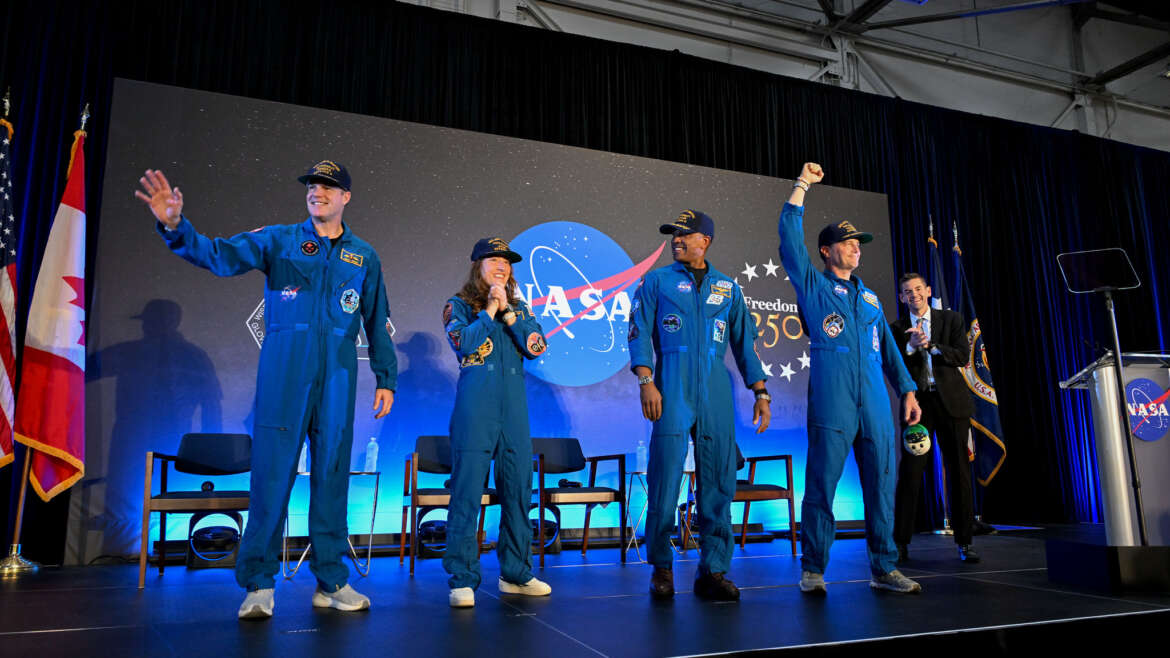
The Artemis II crew included people with different backgrounds. Beyond the astronauts, thousands of engineers, scientists, and international partners contribute different expertise and perspectives. Teams perform better when they include varied skills, experiences, and viewpoints.
Clear communication keeps everything aligned
In a mission as complex as Artemis II, communication between astronauts, mission control and global teams needed to be precise and constant. Even a small misunderstanding could have had huge consequences.
Great teamwork depends on clear, consistent communication, especially under pressure. Everyone needs to know their role, share updates, and speak up when something’s unclear.
You and your team might not be heading to outer space anytime soon and you do not need to be perfect to perform. You just need to build the trust, communicate clearly with each other and have the commitment to keep showing up for each other when it matters most.
Image source: https://www.flickr.com/photos/nasa2explore/55200566547
Author: NASA